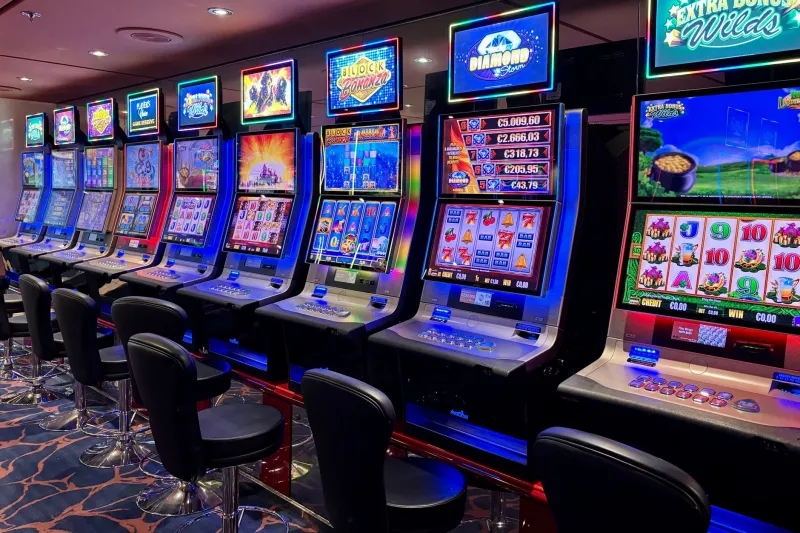
Why Losing Five Times in a Row Feels Like a Sign You're About to Win
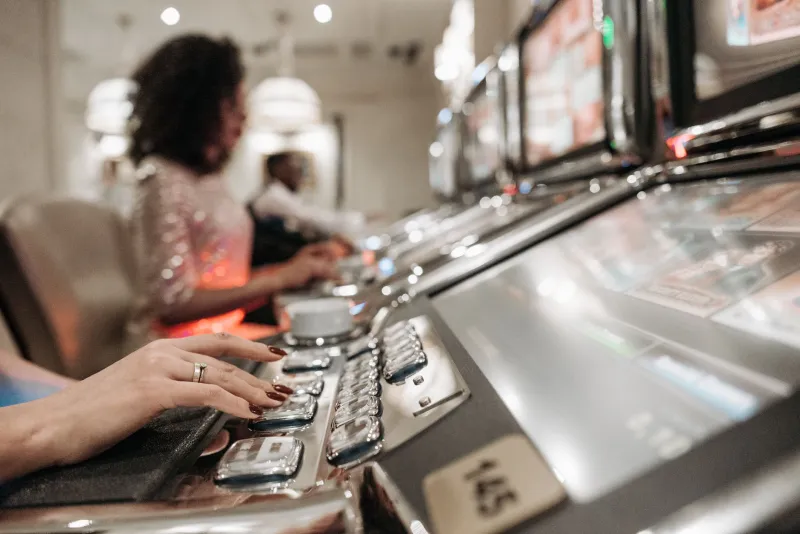
You've been there. Five spins, nothing. Six, nothing. Seven, and the reels tease you with two matching symbols before the third lands just one row off. Something in your chest tightens. You lean forward. It's coming, some part of your brain whispers. You're due.
That feeling is one of the most powerful — and mathematically baseless — sensations in all of gambling. And if you play slots with any regularity, it's probably cost you more money than you realize.
Let's talk about why.
Your Brain Was Not Built for Randomness
Human beings are pattern-recognition machines. It's genuinely one of our greatest evolutionary strengths. Our ancestors who noticed that a rustling bush usually meant a predator survived longer than those who shrugged it off. We are wired, at a deep neurological level, to find meaning in sequences, to connect dots, and to expect that patterns will continue or correct themselves.
The problem? Slot machines don't care about any of that.
Every spin on a modern slot is generated by a Random Number Generator — an algorithm that produces outcomes completely independently of whatever happened before it. The machine has no memory. It doesn't know you've lost seven times. It doesn't owe you anything. The odds on spin eight are identical to the odds on spin one, full stop.
But your brain? Your brain has been keeping score the whole time. And it's starting to draw conclusions.
The Gambler's Fallacy, Island Edition
Psychologists call it the Gambler's Fallacy: the belief that past independent events influence future ones. Flip a fair coin and get heads five times in a row, and most people will tell you tails is "due." It isn't. The coin has no idea what it did before.
Slot machines operate the same way, but the emotional pull is somehow even stronger. Part of that is the visual nature of the game. When you watch reels spinning and stopping, your brain processes it as a sequential experience — a story unfolding in real time. Stories, in our mental framework, tend to build toward something. A run of bad luck reads like the setup before the payoff.
Except in actual random systems, there is no narrative arc. There's just math, repeating itself indifferently, forever.
Near-Misses: The Casino's Sneakiest Trick
Here's where it gets really interesting — and a little unsettling.
Game designers are fully aware of how the human brain processes near-misses. That moment when two jackpot symbols land and the third stops one position above or below the payline? That's not an accident. It's not even necessarily rare. Slot developers can — and do — program games so that near-miss combinations appear more frequently than pure chance would produce them.
This is technically legal. The machine is still random in terms of actual payouts. But the visual presentation of a near-miss can be engineered to appear more often than the underlying probability would suggest, because the symbols on the physical (or digital) reels don't have to map one-to-one with the weighted probabilities in the RNG.
The result: you see two out of three jackpot symbols more often than you'd expect if the game were purely random in its display. And every time you do, your brain lights up in a way that's surprisingly similar to an actual win. Research from the University of Waterloo found that near-misses activate the same reward circuits as real victories — your dopamine system doesn't fully distinguish between almost winning and winning.
You feel encouraged. You feel close. You keep spinning.
That's the design working exactly as intended.
Streaks and the Illusion of Momentum
There's a companion phenomenon worth naming: the Hot Hand Fallacy. Where the Gambler's Fallacy tells you a loss streak predicts a win, the Hot Hand Fallacy tells you a win streak means more wins are coming. Casinos benefit from both directions of this error.
Hit two decent payouts in a row and you feel like you've found the right machine at the right time. The reels seem to be responding to you. You start betting a little higher. You stay longer than you planned.
Hit seven losses in a row and you feel like the machine is "warming up," pressure building like a wave about to crest.
In reality, both streaks are just what random distributions look like in practice. Runs of wins and runs of losses are completely normal features of any random system. But we experience them as signals. We treat them as data. And we make financial decisions based on information that, statistically, means absolutely nothing.
So What Do You Actually Do With This?
Knowing about the Gambler's Fallacy doesn't make you immune to it — that's the genuinely frustrating part. These are deep cognitive patterns, not logical errors you can just think your way out of in the moment. But awareness does give you something to work with.
When you feel that "I'm due" sensation rising, try pausing and naming it. Literally say to yourself: this is the Gambler's Fallacy. Giving the feeling a name creates a small amount of psychological distance between the emotion and the action.
It also helps to set your session limits before you sit down — not after a losing streak has already started building that sense of momentum. When the number is decided in a calm, pre-game moment, it's much harder for in-session emotion to override it.
And if you notice a game is serving up a lot of near-misses? That's not a sign you're close to something. That's actually a sign the game is doing its job particularly well — which is to say, it's doing its job on you.
Ride the Wave, Don't Chase It
Here at Hawaii Spins, we're all for the thrill of the spin. The fun is real, the entertainment is real, and yeah — the wins are real too, when they come. But the wave you're chasing when you're down seven spins and feeling "due"? That wave isn't building. It doesn't exist.
The ocean doesn't owe you a barrel just because the last few sets were flat. And the machine doesn't owe you a jackpot just because it's been quiet.
The best slot sessions happen when you're playing with your head clear, your budget set, and your expectations calibrated to what the game actually is: a random entertainment experience with occasional, unpredictable payouts. Not a puzzle to be solved. Not a pattern to be cracked.
Just a spin. And then another one. Each one brand new.